Aerial Domain
Onboard GPU compute, real-time vision processing, and sensor fusion power the aerial layer of March. From object detection to autonomous routing, air assets integrate directly into the unified mission control stack.
Category:
Air
Author:
Michael Kardas
Read:
11 mins
Location:
BWI Airport
Date:
Nov 21, 2025


Human-in-the-Loop Precision Through Fiber, Control, and Signal Integrity
In modern strike systems, communication isn’t just a feature — it’s the backbone. A fiber optic tether eliminates jamming risk, preserves signal integrity, and enables real-time human-in-the-loop control. Every command, every frame of video, every correction travels through light itself. This architecture doesn’t just reduce cost — it restores precision. By relocating heavy compute and guidance logic to a reusable ground station, we strip complexity from the airframe and redefine scalability. The drone becomes lightweight, modular, and mass-producible. The intelligence stays grounded — powerful GPUs, live video processing, adaptive guidance — all synchronized through a high-speed fiber link. When propulsion, control surfaces, IMU data, and live optical feedback operate in perfect rhythm, the system doesn’t just fly — it responds. Not autonomously drifting. Not blindly guided. But precisely steered, frame by frame, by an operator seeing exactly what the vehicle sees. This is not about replacing systems with cheaper parts. It’s about rethinking architecture. Distributed intelligence. Jam-proof communication. Scalable manufacturing. Low cost. High precision. Full control.

Affordable Autonomy Through Smart Architecture and Scalable Design
In modern aerial systems, cost isn’t just a constraint — it’s a barrier to scale. A cheap drone isn’t about cutting corners; it’s about cutting complexity. By leveraging commercial off-the-shelf components, simplified airframes, and modular electronics, we build systems that can be produced rapidly and deployed everywhere. Instead of concentrating cost into fragile, overengineered hardware, we distribute intelligence intelligently. Lightweight frames. Efficient motors. Compact flight controllers. Optional payload modules that snap in and out depending on the mission. The result is a platform that’s adaptable, repairable, and reproducible at volume. True scalability comes from repeatability. When a drone can be built quickly, replaced easily, and upgraded incrementally, innovation accelerates. Teams iterate faster. Field data improves design. Manufacturing becomes momentum instead of bottleneck. This isn’t about building disposable machines. It’s about building accessible capability. Low cost. High utility. Designed to scale.


Next-Generation RC Jet Platform
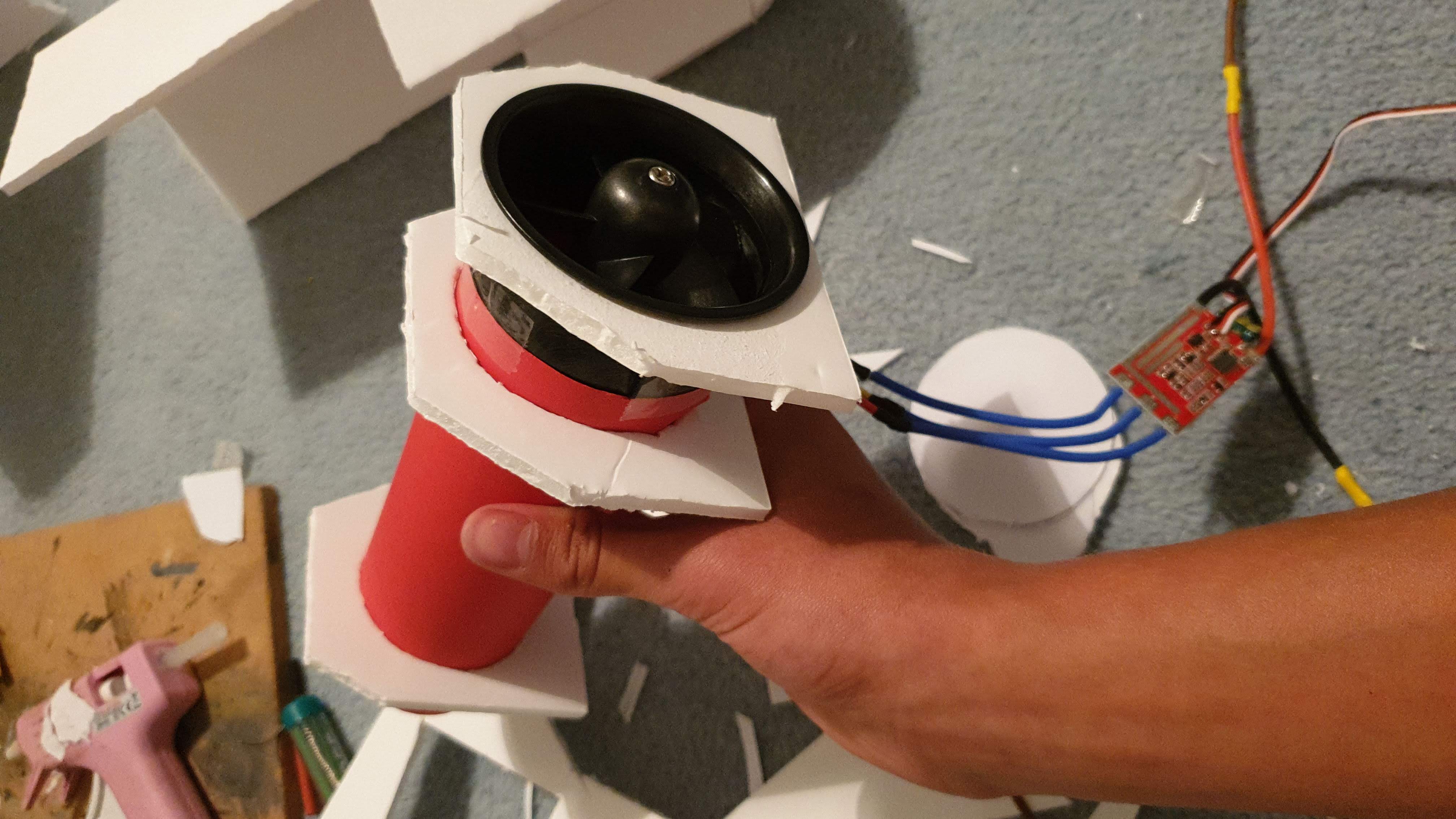
High-speed unmanned systems are no longer reserved for nation-state programs. By combining commercially available jet airframes with compact flight controllers and modern telemetry, we can create agile, research-grade platforms that push the limits of small-scale aerospace engineering. Inspired by fifth-generation aircraft design principles — blended fuselage geometry, control surface precision, and sensor-forward architecture — this RC jet platform becomes a testbed for autonomy, swarm coordination, and advanced control algorithms. Lightweight composite construction meets real-time onboard processing, enabling high-performance maneuvering and responsive flight characteristics. Instead of focusing on scale or spectacle, the emphasis is on iteration. Rapid prototyping. Modular avionics bays. Quick-swap power systems. Each flight becomes data — feeding improvements in guidance, stabilization, and AI-assisted piloting. This isn’t about replicating military hardware. It’s about democratizing advanced aerospace experimentation. High agility. Compact systems. Scalable innovation.

