Sea Deployment
Solar-powered, pier-deployed systems continuously monitor pH, dissolved oxygen, turbidity, and temperature. Marine platforms stream calibrated data into the unified lattice for live analysis and long-duration operations.
Category:
Sea
Author:
Sophia Roberts-Weigert
Read:
12 mins
Location:
Baltimore's Inner Harbor & Chesapeake Bay
Date:
Aug 12, 2025


Autonomous Environmental Recovery
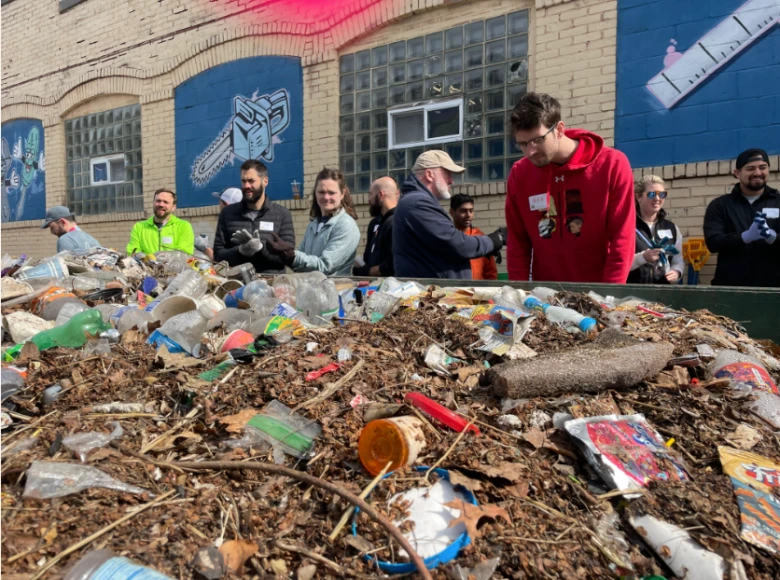
Urban waterways don’t clean themselves — but they can be monitored, navigated, and restored intelligently. The Mr. Trash autonomous collection platform combines solar power, onboard sensing, and real-time telemetry to intercept floating debris before it spreads downstream. It’s not just a robot in the water — it’s a persistent environmental node. Using sensor fusion, GPS positioning, and modular collection systems, the platform operates continuously with minimal human oversight. It maps debris patterns, logs operational data, and feeds insights back into a unified dashboard for analysis and optimization. Every pass becomes both cleanup and dataset generation. Designed for scalability, the system emphasizes durability and maintainability. Marine-grade materials, renewable energy input, and simplified mechanical assemblies ensure long-term deployment in harsh harbor conditions. Intelligence supports the hardware — not the other way around. This isn’t just waste removal. It’s infrastructure for cleaner cities. Autonomous collection. Continuous monitoring. Scalable impact.

Field Validation & Live Water Experiments
Lab results mean nothing without real water. Field testing on the boat turns theory into proof — deploying sensors, logging telemetry, and stress-testing hardware under real Chesapeake conditions. Every launch becomes an experiment in autonomy, endurance, and environmental resilience. Out on the water, variables aren’t controlled — they’re discovered. Salinity shifts, wave motion, wind drag, and biofouling expose weaknesses that simulations never reveal. We measure power draw under cloud cover, validate GPS stability near piers, and calibrate pH and dissolved oxygen against reference samples. The environment becomes the benchmark. Each run generates more than data — it generates confidence. Logs are reviewed, anomalies are flagged, firmware is refined, and mechanical adjustments are made before the next deployment. Iteration happens in cycles measured by tide and sunlight. This isn’t just testing a boat. It’s validating a system in the conditions it was built for. Real water. Real variables. Real proof.


Rapid Prototyping on Water
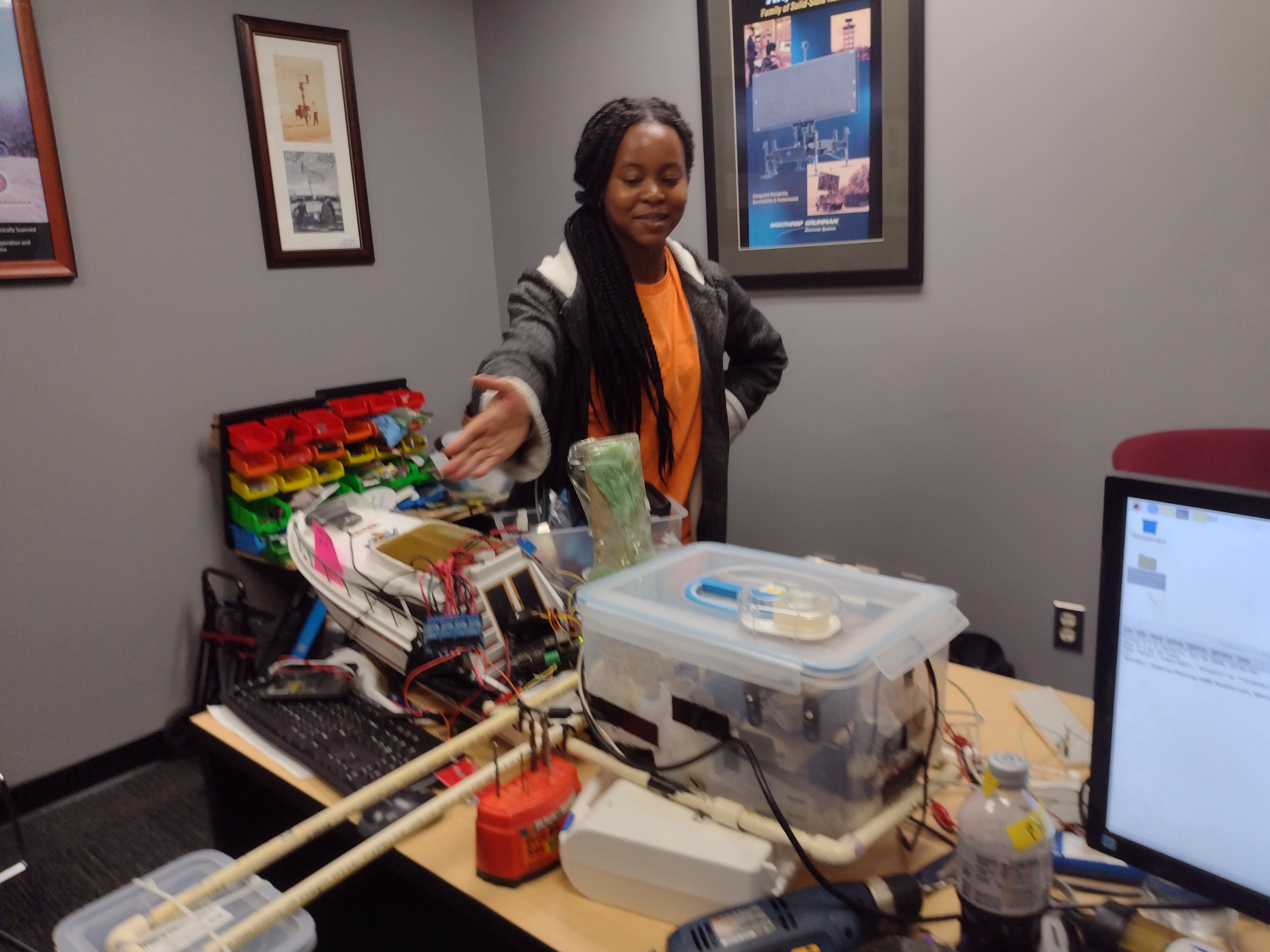
Before committing to a full-scale vessel, we started small. The RC boat became our floating testbench — a low-cost, low-risk platform to validate autonomy, sensor placement, telemetry reliability, and power modeling in real conditions. Instead of theorizing in slides or simulations, we tested on water. We evaluated GPS stability near docks, measured drag impacts on battery life, tuned heading control against crosswind drift, and verified live data streaming from moving hardware. The RC platform allowed us to fail fast, iterate quickly, and refine architecture before scaling up. Every experiment reduced uncertainty. Mount geometry, waterproofing strategy, antenna placement, and firmware logic were proven at miniature scale before touching a full-size deployment. The lessons carried forward — without the cost, complexity, or risk of testing on a major vessel first. This wasn’t just a hobby boat. It was a systems validation tool. Small platform. Real conditions. Scalable confidence.