Land Systems
LiDAR-based obstacle avoidance, EKF navigation tuning, and field-validated waypoint tracking form the backbone of our rover platform. Ground vehicles operate as intelligent nodes within March’s shared telemetry and planning environment.
Category:
Land
Author:
Dominic Liriano
Read:
10 mins
Location:
UMD Campus
Date:
Dec 5, 2025

Autonomous Mobility at Low Cost
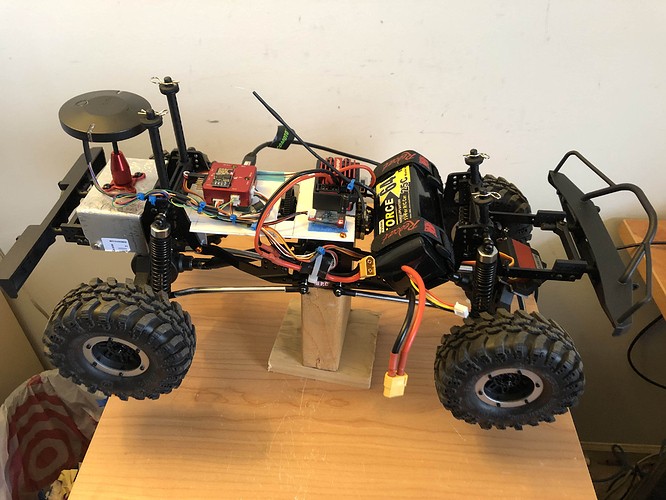
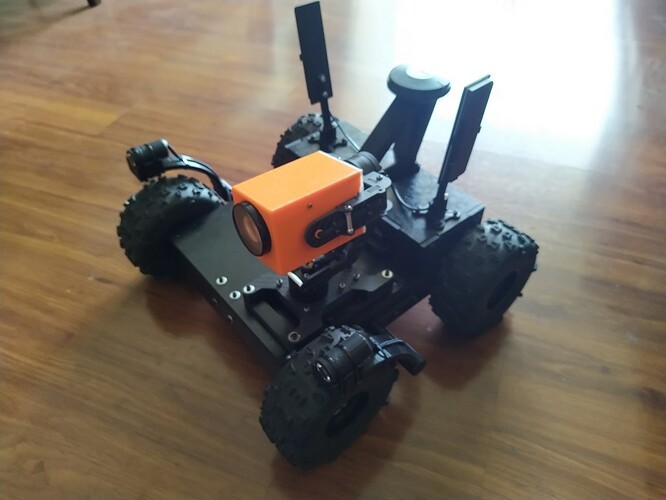
Autonomy doesn’t have to be expensive. The low-cost rover platform proves that intelligent ground systems can be built using commercial off-the-shelf components, open-source software, and modular hardware — without sacrificing capability. Built around LiDAR, GPS, and onboard sensor fusion, the rover navigates waypoints, avoids obstacles, and logs high-resolution telemetry in real time. Its architecture emphasizes separation of concerns: clean power distribution, EMI mitigation, mast-mounted sensing, and tunable navigation control. Every component is selected for accessibility, durability, and ease of replacement. The result is a field-deployable ground node that can be reproduced by a student team or scaled for broader operations. It collects datasets, validates algorithms, and integrates directly into a unified mission control environment — serving as both a research platform and an operational asset. This isn’t about building a luxury robot. It’s about building repeatable autonomy. Low cost. Modular design. Real-world capability.

Student-Built Autonomous Rover
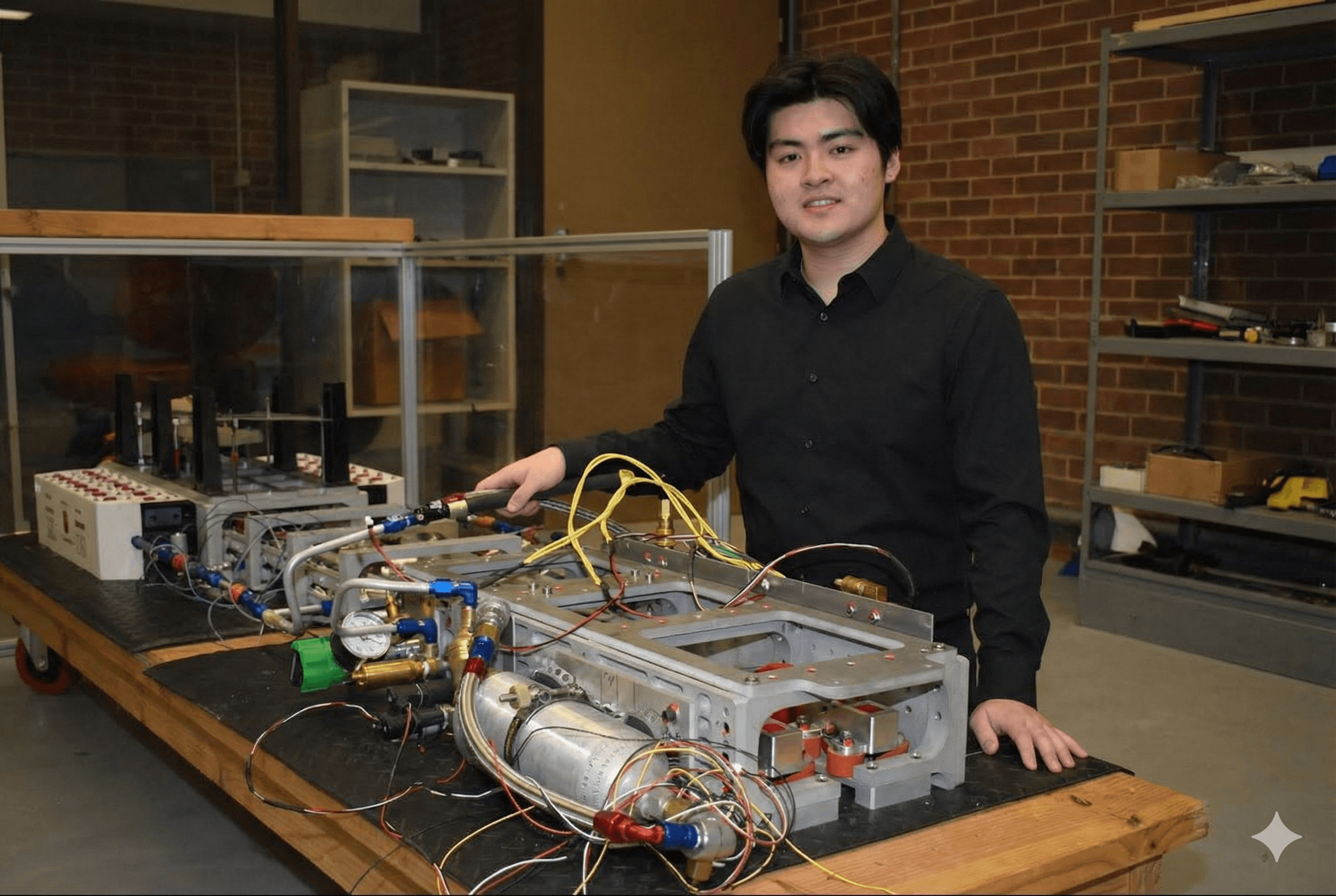
At the University of Maryland, College Park, students are building a practical autonomous rover from the ground up — not as a demo, but as a working field system. Designed, assembled, and tested by undergraduates, the platform combines GPS navigation, onboard sensing, and obstacle awareness into a fully student-operated mobility project. The rover serves as a hands-on laboratory. Students handle everything: mechanical mounting, wiring and power distribution, firmware configuration, and field calibration. Outdoor testing turns classroom theory into measurable performance — waypoint tracking accuracy, sensor stability, and real-world navigation tuning. What makes it powerful isn’t scale — it’s ownership. Every improvement comes from iteration: diagnose, adjust, retest. The project builds technical depth in autonomy, systems integration, and team coordination while remaining accessible and reproducible. This isn’t a corporate prototype. It’s student-engineered autonomy in motion. Built on campus. Tested in the field. Driven by learning.


Connected to Mission Control
The autonomous rover doesn’t operate alone — it plugs directly into a centralized mission control system. Live GPS position, heading, battery status, and sensor feeds stream into a shared dashboard, giving operators a real-time view of the vehicle and its environment. From mission control, students can define routes, monitor progress, and review logs after each run. Commands are issued remotely, telemetry is synchronized across devices, and every movement becomes part of a larger operational picture. The rover transitions from a standalone robot to a networked asset. This integration transforms experimentation into coordinated operations. Multiple platforms can be tracked at once. Data can be compared across runs. Decisions can be made with context instead of guesswork. It’s not just a rover in a field. It’s a node in a live mission system. Connected. Visible. Coordinated.

